AI Search: What It Means for Local Businesses
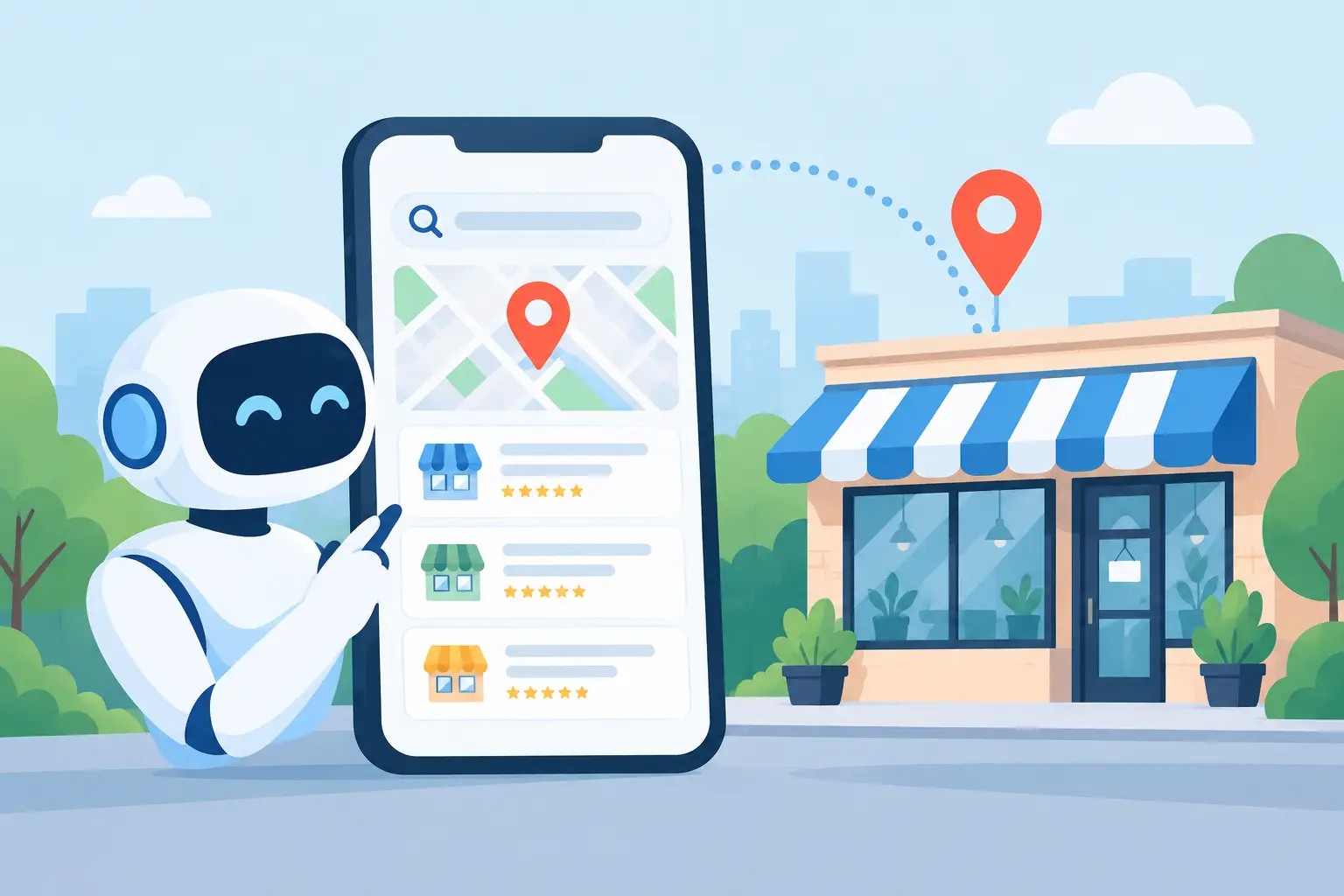
A customer in Dunfermline no longer has to scroll through ten websites to ask who can repair a boiler, fit a new kitchen or help with a tax return. AI search can now pull together an answer, compare options and suggest the next step within the search results themselves.
That does not mean your website has stopped mattering. It means an unclear, outdated or poorly evidenced website is more likely to be ignored before a customer ever reaches it. For local service businesses, the job is no longer simply to rank. Your business needs to be understandable, credible and easy for both people and search systems to recommend.
What AI search changes for local businesses
Traditional search has largely rewarded businesses that appear prominently in a list of results. A customer searches for a service, sees a handful of links, then decides where to click. AI-powered results can shorten that journey by summarising choices, answering follow-up questions and drawing information from several sources.
A person might ask, “Who offers emergency plumbing near me?” and then follow up with, “Which firms cover weekends and have good reviews?” The answer may mention businesses, explain what to check and point the customer towards sources it considers reliable.
This is useful for customers, but it raises the standard for businesses. If your site says only “quality service at competitive prices”, it gives an AI system very little to work with. So does a website that hides its service areas, has no clear explanation of what is included, or makes big claims without proof.
AI search is not a shortcut to free leads. It is another way customers make decisions, and it rewards the same foundations that good local SEO has always required: clear information, genuine expertise, consistent business details and a website that works properly on a phone.
AI search does not make your website optional
There is a tempting but costly assumption that AI will answer every question, meaning businesses no longer need to invest in their websites. The opposite is closer to the truth.
Search tools need reliable information to form useful responses. Your website remains the place where you control the detail: the services you provide, the areas you cover, your process, examples of work, qualifications, team experience and routes to contact you. It is also where an interested customer decides whether your business feels trustworthy enough to call.
An AI-generated answer may introduce a potential customer to your business. It cannot replace the proof they look for before spending money. A homeowner comparing roofers still wants to see relevant work, understand what happens next and find an easy way to request a quote. A professional services client still needs reassurance that they are dealing with the right person.
That is why a polished homepage alone is not enough. A website is a sales asset, not a digital leaflet. It must give customers and search systems a clear reason to understand, trust and choose the business.
What makes a business easier for AI search to understand
The strongest websites do not try to write for robots. They explain the business properly for real customers. Search technology can then interpret the information more confidently.
Specific service pages beat vague promises
Each important service should have a focused page that explains what you do, who it is for, what problems it solves and what a customer can expect. A Fife electrician, for example, should not rely on one paragraph listing rewires, inspections, fault finding and emergency work. Separate, useful service information gives a clearer match for specific searches.
The detail must be honest. Do not create pages for work you do not offer or locations you do not genuinely serve. Thin pages built only to capture searches may create a poor customer experience and weaken trust.
Proof matters more than marketing language
AI systems are designed to identify useful, dependable information. Customers are too. Replace unsupported claims such as “the best in Scotland” with evidence that helps someone decide: years in business, relevant accreditations, case studies, project photographs, customer feedback and a clear explanation of your working process.
For some businesses, transparent pricing guidance is useful. For others, every job requires a survey before a price can be given. Either approach is valid, but explain why. A customer is far more likely to enquire when they understand what affects cost and what will happen after they get in touch.
Consistent local information prevents confusion
Your business name, phone number, service area and opening hours should be consistent wherever customers find you. Conflicting details make it harder for people to act and may reduce confidence in the information search systems retrieve.
This is particularly important for businesses serving several places across Fife, Edinburgh or Perth. Be clear about your base and your actual coverage. A genuine service-area statement is more useful than trying to appear local everywhere.
Technical basics still count
A slow, awkward mobile site loses customers regardless of how clever search becomes. Pages need to load quickly, display properly on smaller screens and make contact details easy to use. Clear page titles, sensible headings and properly structured content help search engines understand the site, but the commercial goal is simpler: fewer barriers between a customer and an enquiry.
How to prepare your website for AI search
Start with the questions your customers ask before they contact you. Not the questions you wish they asked, but the practical concerns that come up on calls, surveys and quotes. How quickly can you attend? Do you cover my area? What does the service include? Do I need to prepare anything? How long will the work take?
Answer those questions on the relevant service pages in straightforward language. This improves the customer journey and gives search systems useful context. It also reduces unqualified enquiries because people understand the basics before they get in touch.
Then review the paths through your website. Someone arriving from an AI answer may land directly on a service page rather than your homepage. That page should make sense on its own. It needs a clear service description, confidence-building proof, a visible service area and an obvious next action, such as calling, requesting a quote or booking a consultation.
Keep case studies current. A short explanation of the problem, the work completed and the outcome can do more for credibility than a gallery of unlabelled images. If customer permission allows, include the type of project and general location. “Kitchen redesign for a family home in Kirkcaldy” is more informative than “Project 12”.
Finally, make it easy to maintain accuracy. An old team page, disconnected phone number or service that ended three years ago can undermine everything else. Set a regular review date for your core pages, business details and customer feedback. Small corrections are cheaper than rebuilding trust after a missed enquiry.
Where businesses go wrong
The first mistake is chasing AI trends while ignoring a website that already performs badly. Adding a chatbot will not fix unclear services, slow pages or a contact form nobody can find. New tools should support a sound customer journey, not distract from its weaknesses.
The second is publishing generic AI-written content in bulk. Search systems and customers can both spot content that says a lot without saying anything useful. A local service business has an advantage here: it has real experience. Use it. Explain the situations you see, the choices customers face and the standards you apply.
The third is treating AI answers as guaranteed. Search results change, and AI can occasionally misunderstand, omit or inaccurately summarise information. You cannot control every answer shown to a customer. You can control whether your own website is the clearest, most credible source available.
Measure the business result, not the hype
Do not judge AI search preparation by whether a business appears in every new type of result. Track the outcomes that pay the bills: qualified phone calls, form submissions, consultation bookings and the value of work won.
Look at which service pages bring visitors in, where people leave, and whether mobile users can contact you without effort. If visibility rises but enquiries do not, the issue may be the offer, the messaging or the route to conversion rather than search performance itself.
The businesses most likely to benefit from AI search will not be those trying to game it. They will be the ones that make it genuinely easy for a customer to understand what they do, verify their credibility and take the next step. If your website is currently making people work to find those answers, that is the gap worth fixing first.
More Posts
 24 October 2026
- 23 October 2026
- 22 October 2026