Google Maps Visibility Guide for Local Businesses
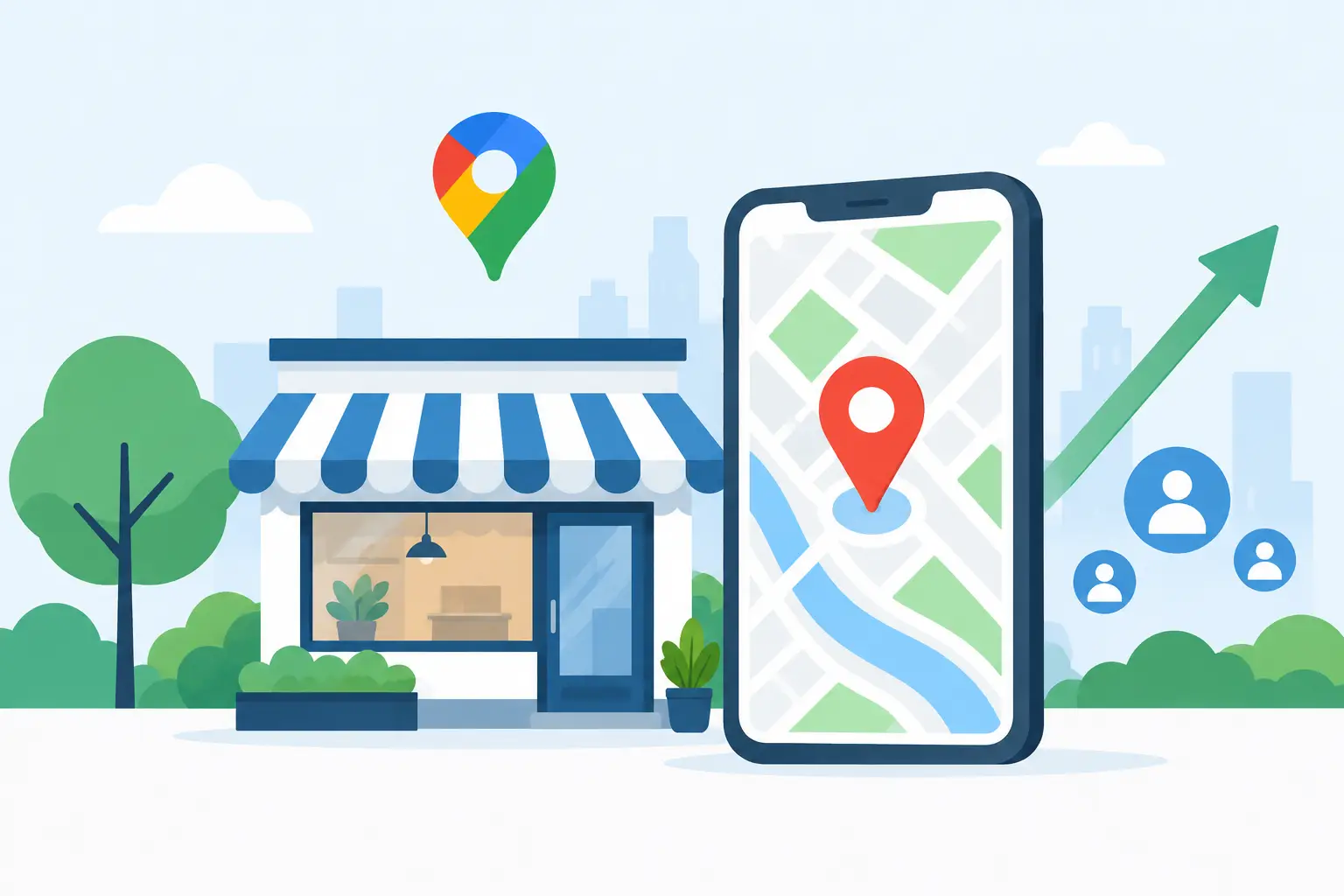
When someone searches for a plumber in Dunfermline, an accountant in Fife, or a nearby electrician, they are rarely researching for fun. They have a problem to solve and are looking for a business they can contact now. This Google Maps visibility guide explains what puts a local business in front of those high-intent searches, and what quietly pushes it out of view.
A good-looking website alone will not do it. If your Google Business Profile is incomplete, your service areas are unclear, your reviews are old, or your website gives Google little evidence of where and what you serve, competitors can take the call before a potential customer even reaches your site.
How Google Maps visibility actually works
Google aims to show the most useful nearby result for a particular search. For local businesses, that decision broadly comes down to relevance, distance and prominence.
Relevance is how well Google understands that your business offers the service searched for. An electrician whose profile, website and customer feedback clearly refer to domestic rewires, fuse board upgrades and emergency call-outs gives stronger signals than one with a vague description and a generic website.
Distance is the searcher’s location compared with your registered address or the area Google believes you serve. You cannot out-optimise geography entirely. A business in Kirkcaldy may not consistently appear ahead of a well-established Dunfermline competitor for a person searching from the centre of Dunfermline. That is normal, not proof that something is broken.
Prominence is your business’s wider level of trust and recognition. Reviews, review quality, accurate business information, links and mentions from credible local sources, website strength and customer engagement all contribute. Google does not publish a simple points system, which is why anyone promising a guaranteed number-one Maps position should be treated carefully.
The practical point is this: Maps visibility is not a single task. It is the result of clear business information, credible proof and a website that supports the profile rather than contradicts it.
Start with a Google Business Profile that is complete
Your Google Business Profile is often the first impression a customer gets. It needs the same care as your reception area, van signage or shopfront. A neglected profile tells people that contacting you may be difficult. It also gives Google less confidence in what you do.
Choose the most accurate primary category available. This matters more than trying to add every possible phrase to the profile. A roofing contractor should not select a broad category simply because it seems popular if a more precise option reflects the main service. Add relevant secondary categories only where they genuinely match services you provide.
Use your real business name. Adding town names, services or promotional claims to the name field may look tempting, but it can breach Google’s guidelines and leave the listing vulnerable to edits or suspension. Short-term shortcuts are a poor trade for an asset that produces enquiries.
Your contact details must match the real-world business. Keep your phone number, website, opening hours and address current. If you visit customers rather than receive them at your premises, set the profile up as a service-area business and hide the address where appropriate. Do not use a virtual office or a relative’s address just to target a town where you are not genuinely based.
Write a plain-English description that explains your main services, the areas you cover and why customers choose you. Avoid stuffing it with repeated town names. A clear sentence about serving Dunfermline, west Fife and nearby areas is more useful than a block of awkward location phrases.
Give Google clear evidence on your website
A Google Business Profile can generate calls directly, but your website is still the proof behind it. Google and potential customers need to see a credible, consistent account of your business.
Your core service pages should explain each meaningful service properly. A page titled “Services” with two short paragraphs does little to establish relevance. A dedicated page for boiler repairs, for example, can explain the types of fault you handle, who the service is for, the areas covered, expected response times and how to get in touch. It helps customers make a decision and gives search engines useful context.
Location matters, but thin pages created only by swapping “Dunfermline” for “Rosyth” or “Inverkeithing” are weak. They create little value for visitors and are unlikely to build lasting visibility. Build location-focused content only where you have genuine experience, useful local detail or a clear reason to serve that area.
Make basic trust signals easy to find: your trading name, phone number, service area, opening details where relevant, customer testimonials and clear contact options. Keep these details consistent with your Business Profile. Conflicting phone numbers or old addresses create friction for customers and uncertainty for Google.
Mobile performance is part of this. Most Maps searches happen on phones, often when the customer needs an answer quickly. If a visitor taps through to a slow site, cannot read the text or has to hunt for a number, your visibility has not become a sale. A site should make calling, requesting a quote or booking an appointment straightforward.
Reviews are evidence, not decoration
Reviews influence whether customers choose you, and they can strengthen local prominence over time. The goal is not to chase a large number at any cost. A steady pattern of genuine, recent feedback is more credible than a sudden batch of generic five-star reviews.
Ask after a successful job, completed appointment or positive handover, while the experience is fresh. Make the request simple and polite. Staff should never pressure customers, offer incentives for positive reviews or write reviews on a customer’s behalf. Those tactics damage trust and can breach platform rules.
Reply to reviews in a professional, human way. Thank customers for specific feedback where possible. If a complaint is fair, acknowledge it without becoming defensive and offer to resolve the issue privately. A measured response to a difficult review can reassure the next customer reading it.
Do not panic over the occasional imperfect score. A profile with only glowing, identical comments can look less believable than one with varied feedback and thoughtful responses. What matters is the overall pattern, recency and the way the business behaves when something goes wrong.
Improve your Google Maps visibility without wasting effort
Many owners lose time on tasks that look like local SEO but do not address the actual problem. Posting daily updates to a poorly built profile will not compensate for the wrong category, weak reviews or a website that does not explain your services. Equally, paying for dozens of low-quality directory listings is unlikely to create the local authority your business needs.
Focus first on accuracy, service clarity and customer proof. Then look for legitimate local signals. A mention from a respected local organisation, trade body, supplier, community event or local publication can be valuable where it reflects a real relationship. These are not tricks. They are signs that your business exists and is trusted beyond its own website.
Photos also deserve attention. Use current, genuine images of your work, team, premises, vehicles or finished results, depending on the business. Stock photos may make a profile look polished, but they rarely prove much. A potential customer wants confidence that you are real, active and capable of doing the work described.
Track outcomes, not just ranking positions. Rankings move according to location, device, search history and the wording used. A screenshot showing you at the top from your own office is not a reliable measure of performance. Watch calls, direction requests, website visits, form enquiries and the quality of jobs coming through. Visibility only has commercial value when it contributes to worthwhile business.
A practical monthly check
Set aside time each month to check that your opening hours, phone number, service areas and website link are correct. Add a small number of relevant new photos, respond to recent reviews and check whether customers can easily call or enquire from a mobile phone.
Every quarter, review your main service pages. Are they still accurate? Do they answer the questions customers ask before they contact you? Have you completed work that could become a useful case study or testimonial? This is a more sustainable approach than repeatedly chasing a quick ranking fix.
If your profile is visible but enquiries remain weak, the issue may be conversion rather than visibility. If it barely appears at all, start with the foundations: correct category, accurate details, useful service pages and a reliable process for earning reviews. MonoWeb’s approach is to treat these parts as one connected system, because a profile, website and enquiry journey should support the same commercial goal.
Google Maps can become one of the most valuable local channels for a service business, but it rewards clarity and credibility more than clever tactics. Put the customer first, make it easy for Google to understand your business, and make every click feel like the start of a straightforward conversation.
More Posts
 Website Tips
Custom Website Versus Template: Which Works?
26 September 2026- 25 September 2026
- Website Tips
How to Improve Form Conversions on Your Website
24 September 2026