Fife Web Design Guide for More Enquiries
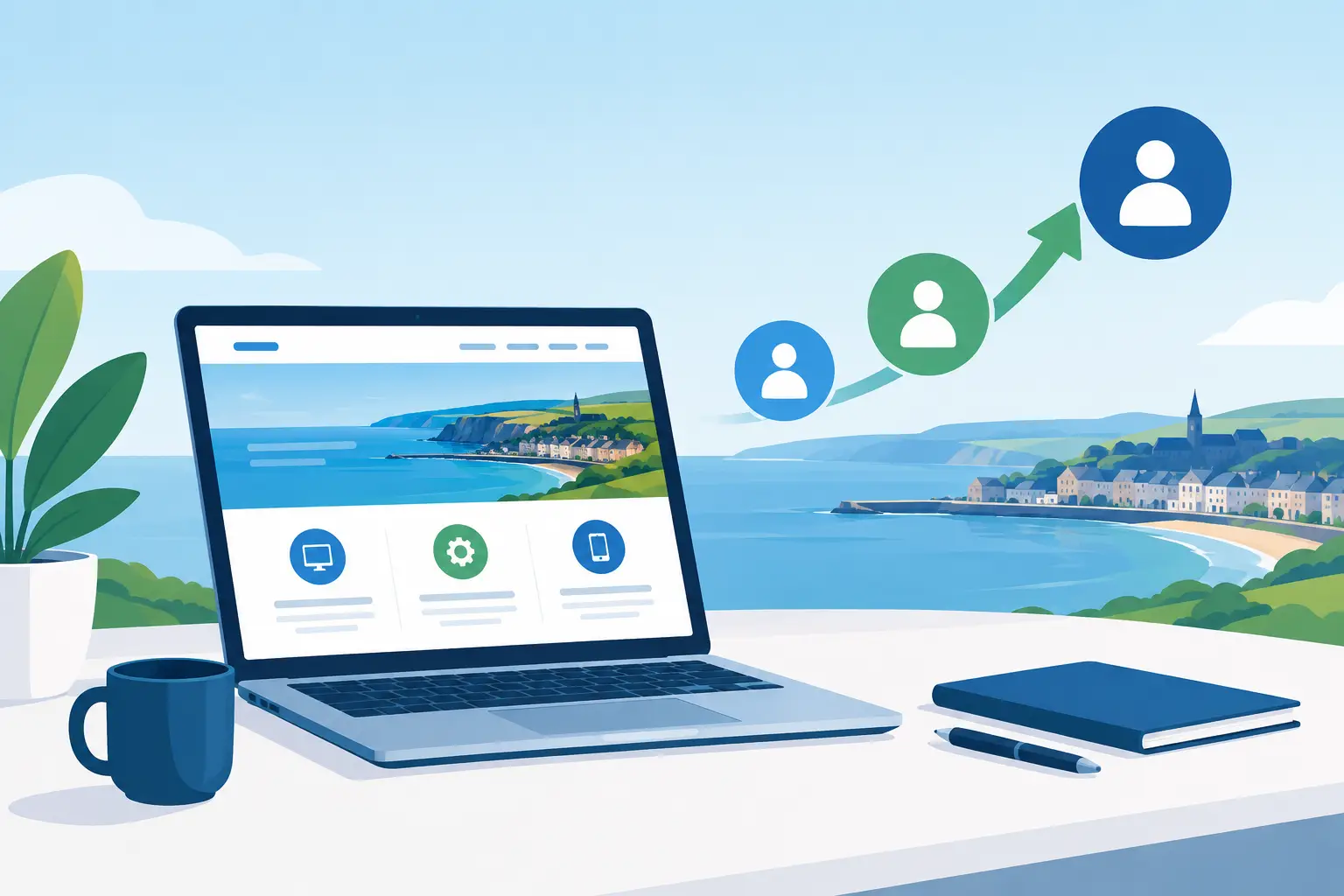
A website can look perfectly respectable and still cost a local business work. If a potential customer cannot quickly see what you do, trust you, find you on Google or contact you from their phone, they will usually try the next business. This Fife web design guide is for owners who need their site to do more than sit online looking polished.
For a plumber, solicitor, salon, builder, consultant or specialist service business, the website should support a straightforward commercial job: bring in the right visitors, give them confidence and make the next step easy. That means design matters, but it is only one part of the work.
Start with the business outcome, not the homepage
The first question is not, “What should the website look like?” It is, “What should it help the business achieve?” The answer may be more quote requests, higher-value jobs, bookings, calls, recruitment enquiries or better-quality leads. A site designed around that outcome makes better decisions from the start.
For example, a Fife roofing company may want enquiries for full replacements rather than small repair jobs. Its website should therefore make replacements prominent, explain the process, show relevant project evidence and invite visitors to request a survey. A generic homepage with a long list of every service gives less direction and tends to attract less useful enquiries.
This is where many web projects lose value. A business selects colours, imagery and fonts before agreeing on customer priorities. The result can be attractive, but it lacks a clear job. Strategy first does not mean lengthy workshops or marketing jargon. It means being clear about who the site is for, what they need to know and what action matters most.
Build your Fife web design around customer decisions
Most local service customers arrive with a practical concern. They have a problem to solve, a job to arrange or a provider to compare. Your website needs to answer their unspoken questions quickly: Can this business help me? Do they cover my area? Are they credible? What happens next? How much effort will it take to get in touch?
The homepage should state the core service clearly, ideally in the first screen visitors see. Vague phrases such as “quality solutions tailored to you” sound professional but say very little. “Domestic electrical work across Dunfermline and Fife” is more useful because it gives people an immediate reason to stay.
Each important service needs its own page. This is not just an SEO exercise. A dedicated page gives you room to explain the service, who it suits, common concerns, the process and the best next step. Someone searching for kitchen fitting has different questions from someone searching for emergency repairs. Sending both people to one broad services page creates friction.
Use proof where people need reassurance
Claims are easy to make. Evidence does the convincing. Place customer reviews, relevant qualifications, project photographs, case studies and clear experience statements close to the services they support. For local businesses, real images of completed work and genuine team photography can be more persuasive than generic stock photos.
Be selective. Ten weak testimonials crammed into a page are less useful than two specific comments that describe the quality of work, communication and outcome. If you show project imagery, explain what the job involved. It turns a gallery into proof that you solve a particular type of problem.
Make contact feel low effort
A visitor should not have to hunt for a telephone number or complete a twenty-field form just to ask a simple question. Clear calls to action should appear naturally throughout the page, not only at the bottom. Depending on your service, that could be “Request a quote”, “Book a consultation” or “Call for advice”.
Forms should ask for enough information to qualify the enquiry without becoming a barrier. Name, contact details, service required and a brief message are often enough for an initial conversation. If a site needs more detail for accurate quotes, explain why. People are more willing to share information when the purpose is clear.
Mobile speed is part of customer service
Most local searches happen on a mobile phone, often when someone is short on time. A slow, awkward site does not merely affect rankings. It makes the business appear harder to deal with.
Mobile design should be considered first, not treated as a smaller version of the desktop site. Buttons need enough space to tap. Text must be readable without pinching and zooming. Key information such as service areas, opening times and contact options should be easy to find. A phone number should be visible and usable where calling is a common next step.
Speed needs similar attention. Oversized images, unnecessary animations, cheap hosting and overloaded page builders can make a website drag. The trade-off is worth understanding: visual effects may appear impressive in a design review, but if they delay the page or distract from the enquiry route, they are working against the business.
A well-built WordPress website can be fast, flexible and easy to manage. But WordPress is not a performance guarantee on its own. The quality of the build, hosting, image handling and ongoing maintenance all affect the result.
Earn local visibility before paying for more traffic
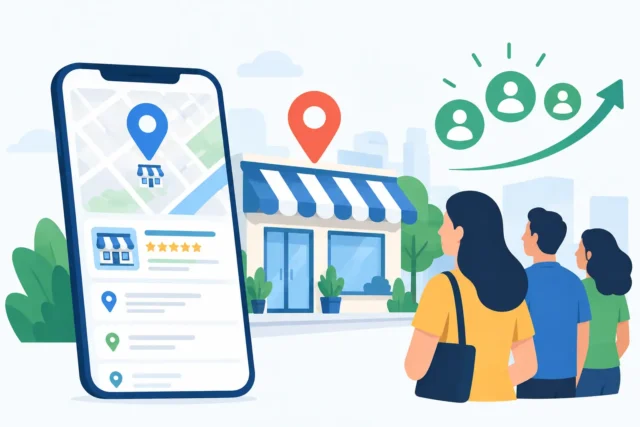
A new website is not automatically visible in Google. Search engines need clear signals about what you offer, where you operate and why your pages deserve to appear for relevant searches.
Start with the fundamentals: one focused page for each core service, clear page titles, useful page copy and consistent business details. If you work across Fife, avoid creating thin pages that simply swap one town name for another. They add little value for customers and rarely build lasting search visibility.
Instead, create pages that reflect genuine local relevance. A service page might mention areas covered where it helps visitors. A project case study can explain work completed in Kirkcaldy, St Andrews or Dunfermline. Useful guidance about common local customer needs can also support visibility, provided it is written to help rather than fill space.
Your Google Business Profile, customer reviews and consistent contact information are part of the wider local presence too. The website should support those signals, giving visitors a credible place to verify the business before they call.
Design for trust, not personal taste alone
Owners naturally have preferences about colours, logos and style. Those preferences matter, but they should not be the only decision-maker. The right design depends on the audience, the service, the price point and the level of trust required before someone enquires.
A premium professional service may need a quieter, more considered presentation. A fast-response trade business may benefit from direct messages, obvious phone contact and high-contrast service information. Neither approach is universally better. The problem comes when a site follows a fashionable visual trend while making basic information difficult to read.
Consistency matters more than decoration. A coherent logo, typeface, colour palette, photography style and tone of voice make a small business look established. Inconsistent branding can create doubt even when the service itself is excellent.
Accessibility should also be built into the design. Good contrast, readable font sizes, descriptive headings and sensible navigation help more people use the site. They also make the content clearer for everyone, including customers viewing a screen outdoors or quickly scanning on a phone.
Measure whether the website is doing its job
Without measurement, website decisions become opinion-led. You may know how many people visit, but the more useful question is what they do next. Are people calling? Are forms being submitted? Which service pages lead to enquiries? Are visitors leaving quickly because a page does not answer their question?
Set up tracking for meaningful actions rather than chasing vanity numbers. A thousand extra visitors are not helpful if none are suitable customers. For many local businesses, a modest number of qualified monthly enquiries is more valuable than broad traffic from people outside the service area.
Review performance regularly, then improve the pages that matter. If a key service attracts visits but few enquiries, the issue might be unclear pricing expectations, weak proof, a slow page or a buried call to action. It is rarely solved by changing a button colour in isolation.
Treat the website as an operating asset
A website is not finished when it launches. Services change, reviews arrive, projects are completed and customers ask new questions. Updating the site with useful proof and clearer information keeps it credible and gives search engines fresh reasons to understand the business.
It also creates an opportunity to reduce admin. Enquiry forms can route requests to the right person, booking tools can cut back-and-forth messages, and automated follow-ups can make sure valuable leads are not forgotten. Automation should remove repetitive work, not replace the human response customers expect from a local business.
If your current site is slow, unclear or producing too few enquiries, do not assume the answer is a cosmetic redesign. Start by identifying where customers lose confidence or cannot take action. A focused website review can reveal whether the real gap is visibility, mobile performance, messaging, trust or the path from visitor to enquiry. Fixing that gap is where a website starts earning its place in the business.
More Posts
 Website Tips
What Are the Best Web Design Agencies in the UK?
8 November 2026- Website Tips
How Local Ranking Results Bring Better Enquiries
5 November 2026 - 3 November 2026