How Local Ranking Results Bring Better Enquiries
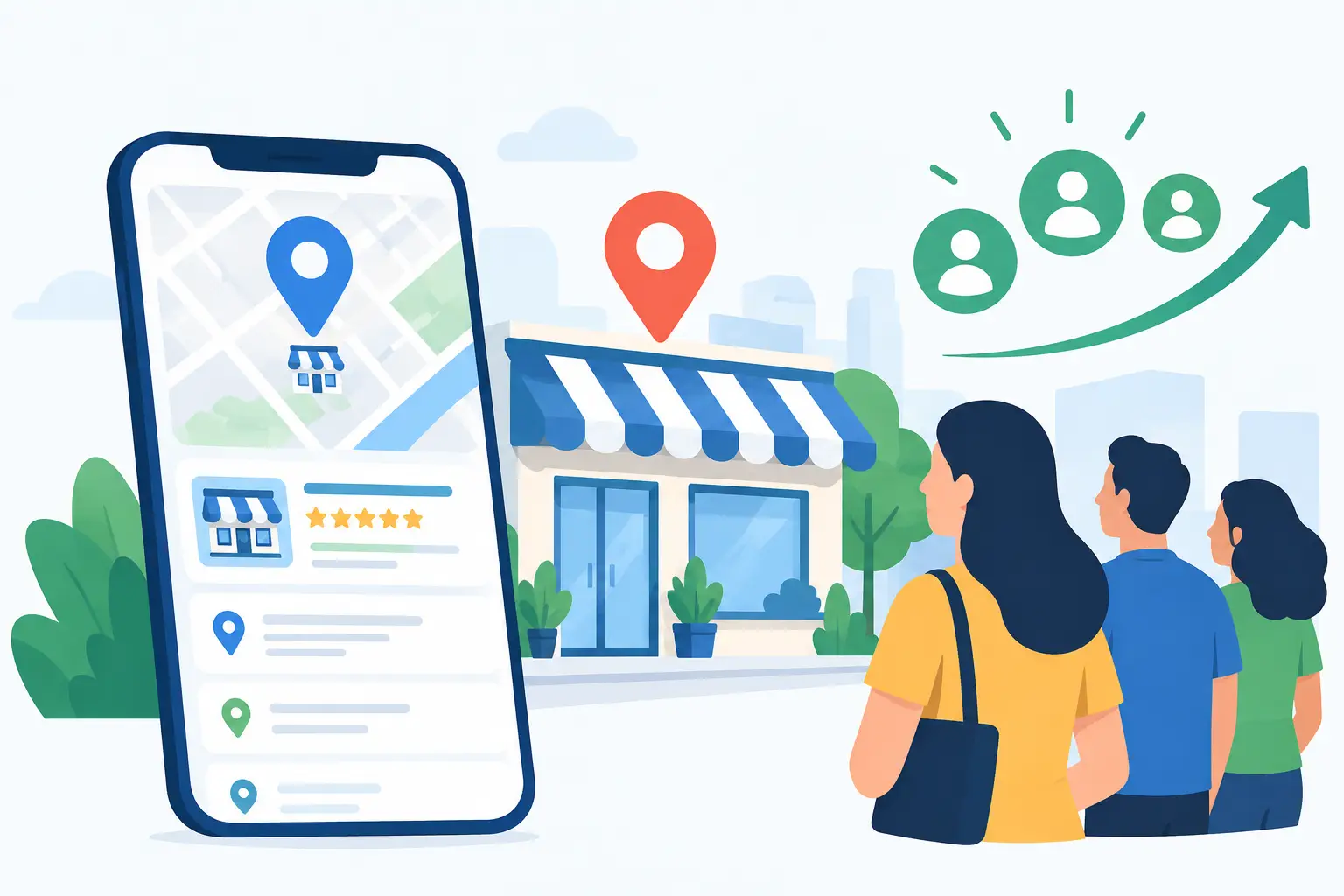
When someone searches “plumber near me”, “family solicitor Dunfermline” or “web designer Fife”, they are rarely researching for fun. They have a problem to solve and are looking for a business they can contact with confidence. Your local ranking results determine whether your business is part of that decision or invisible at the point it matters most.
For local service businesses, better visibility is not a vanity metric. It should lead to more relevant website visits, more calls and more enquiries from people already looking in your area. But ranking locally is not a matter of adding a town name to every page or collecting a handful of reviews. Google is trying to show the most useful, credible and geographically relevant answer. Your website and wider online presence need to make that choice easy.
What local ranking results actually include
Local search results usually appear in more than one place. The most obvious is the map section, often showing a small group of businesses with review scores, opening hours and contact details. Below that are the standard website results, which may include local competitors, directories and specialist articles.
A business can perform well in one area and poorly in another. You may appear prominently in the map results around your premises but be harder to find in ordinary organic results. Equally, a well-written service page may rank for a valuable search while your Google Business Profile is incomplete or poorly reviewed.
That distinction matters because customers use both. Some will call directly from the map. Others will open several websites, compare proof of experience, and submit an enquiry to the business that feels most credible. The aim is not simply to occupy a position. It is to be visible where customers search, then give them a clear reason to choose you.
Why your business may not be appearing locally
The frustrating part of local SEO is that a good business does not automatically make a visible business. A reliable electrician with years of experience can lose work to a less experienced competitor if their website is slow, their service information is thin, or their Google profile has been neglected.
Google broadly assesses local visibility through relevance, distance and prominence. Relevance means how well your business information matches what the person has searched for. Distance reflects where the searcher is located or the area named in their search. Prominence is the evidence that you are a legitimate, established and trusted choice.
You cannot control every part of this. A business in Kirkcaldy will not always outrank a strong competitor for a search made in central Edinburgh, and it would be misleading to promise otherwise. What you can control is the quality and consistency of the signals your business sends.
Common weaknesses include a website that barely explains its services, missing or incorrect business details, an unverified Google Business Profile, old photographs, few recent reviews, and pages built around vague claims such as “quality service”. None of these problems sounds dramatic on its own. Together, they tell search engines and prospective customers very little.
A ranking is only useful if it produces work
It is possible to rank for searches that do not bring the right customers. A broad phrase may attract browsers from outside your service area, while a specific search such as “emergency boiler repair in Dunfermline” may generate fewer visits but far more calls.
That is why traffic alone is a poor measure of success. A local visibility plan should focus on the services you want to sell, the places you can serve profitably, and the enquiries your team is able to handle. For some businesses, covering every town in Scotland makes commercial sense. For others, concentrating on a tighter area protects response times, margins and reputation.
Build pages around real customer searches
Your website needs a dedicated, useful page for each important service. If you provide kitchen fitting, bathroom installation and joinery, placing all three in one short paragraph on the home page is unlikely to do the job. Customers search differently depending on what they need, and each service deserves a page that answers their questions clearly.
A good local service page explains what you do, who it is for, what the customer can expect, the areas you cover and how to get in touch. It should include genuine proof where possible: project photographs, case examples, qualifications, guarantees, testimonials or clear details of your process.
Location pages can help, but only when they provide real value. A useful Dunfermline page might explain the services available locally, show relevant work and give practical reasons to contact you. Creating near-identical pages for every village with only the place name changed is weak content. It offers little to the reader and is unlikely to build lasting visibility.
Your home page also has a job to do. It should quickly establish your core offer, service area and next step. If a visitor cannot tell within a few seconds what you do, where you work and how to enquire, a higher ranking will simply send more people to a dead end.
Treat your Google Business Profile as a working asset
Your Google Business Profile is often the first version of your business a customer sees. Leaving it half-finished is the digital equivalent of keeping your shopfront poorly signed and your phone number hidden.
Start with accurate basics: business name, primary category, telephone number, website address, hours and service area. Choose categories carefully. They help Google understand what you are, but they should reflect the services you genuinely provide rather than every search phrase you would like to rank for.
Then maintain the profile. Add current photographs that show your team, work, premises or vehicles where relevant. Keep opening hours correct, especially around holidays. Add services in plain language. Respond to reviews professionally, including the occasional difficult one. A measured response shows prospective customers that you take accountability seriously.
Reviews deserve particular attention because they influence both confidence and visibility. Do not buy them, pressure customers or use a one-off campaign that stops after a month. Instead, build a simple habit into the end of a successful job. Ask genuine customers for an honest review while the experience is still fresh. The steady pattern matters more than a sudden batch of generic five-star comments.
Make trust easy to verify
Local customers are cautious for good reason. They may be inviting someone into their home, sharing personal financial information or committing a significant budget. A polished site helps, but polish without evidence can feel hollow.
Use your website to answer the questions that delay an enquiry. Who will do the work? Are you insured or accredited? What areas do you cover? What happens after someone contacts you? Can they see examples of comparable work? How quickly do you respond?
Keep your business details consistent across your website, Google profile and established directory listings. Small discrepancies in a phone number, address or trading name create unnecessary confusion. More importantly, they create doubt for the person deciding whether to call.
Technical quality supports this trust as well. A slow site, awkward mobile forms and broken buttons cost leads after Google has done the hard work of sending a visitor your way. Most local searches happen on a phone. The call button, enquiry form and key service information should be straightforward to use without pinching, zooming or hunting through a menu.
Measure the enquiries, not just the positions
Rankings shift by location, device, competition and the searcher’s previous activity. Checking your own business name from your office is not a reliable test of how potential customers see the results. It can give an artificially flattering picture.
Track the outcomes that matter alongside visibility: calls, form submissions, direction requests, booked consultations and the source of your best leads. Ask new customers how they found you, particularly when they telephone. Over time, this reveals which services and locations are producing worthwhile work rather than merely website visits.
If enquiries are low despite decent rankings, the issue may be your offer or conversion path rather than SEO. If your website performs well but you are barely visible for important searches, the priority is likely local relevance and authority. Treating every digital problem as a ranking problem is how businesses spend money without fixing the blockage.
A practical starting point for stronger local visibility
Begin with an honest review of what a customer sees. Search for your core services from a mobile phone, inspect your Google Business Profile, and visit your own site as if you had never seen it before. Can you understand the offer, trust the business and enquire without effort?
Then focus on the gaps with the greatest commercial impact. For many local businesses, that means improving a core service page, correcting profile information, gathering genuine recent reviews and fixing a slow or dated mobile website before chasing more advanced tactics.
Local ranking results improve when your business is clear, credible and easy to contact. If you are unsure which issue is holding your site back, a proper website review can turn a vague sense that “Google is not working” into a practical set of priorities worth acting on.
More Posts
 Website Tips
What Are the Best Web Design Agencies in the UK?
8 November 2026- 3 November 2026
- Business tips, Website Tips
Best Web Design Agencies in Scotland for Growth
31 October 2026