Choosing a WordPress Developer in Fife for Growth
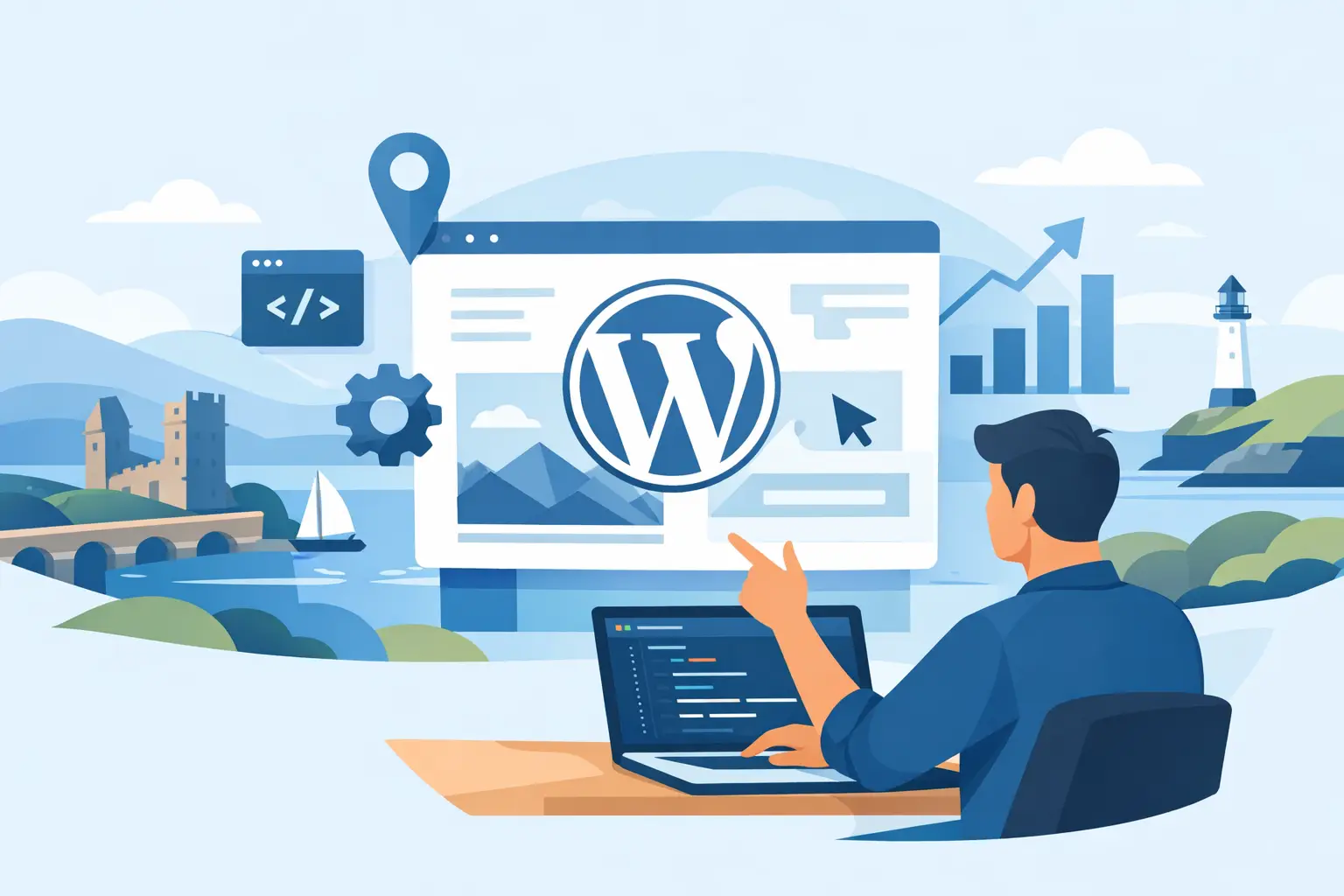
A WordPress developer Fife businesses choose should do more than make a website look presentable. Your site needs to earn its place in the business. It should help the right people find you on Google, understand what you offer quickly, trust your business and take the next step – whether that is calling, booking or requesting a quote.
That matters because a dated, unclear or poorly built website is not simply sitting there doing nothing. It can actively send potential customers to a competitor. For a local service business, the difference often comes down to whether someone can find what they need on their phone in under a minute.
A WordPress developer in Fife should start with the business
The common mistake is beginning with colours, fonts and a homepage layout. Those things matter, but they are not the starting point. Before design and development begin, a developer should understand how your business wins work.
Who is your best customer? What services produce the most value? Which areas do you serve? What questions do customers ask before getting in touch? And what counts as a good enquiry rather than a time-wasting one?
A joiner covering Dunfermline and West Fife, for example, may need to show the quality of finished work, explain the types of projects they take on and make it easy to request a site visit. A solicitor, accountant or consultant may need clearer reassurance around experience, process and confidentiality. The website structure should reflect those differences.
This strategy-first approach also prevents a costly problem: building a polished site that attracts the wrong traffic or gives visitors no reason to act. A good developer will challenge vague messaging and unclear priorities before they become expensive pages.
What a revenue-focused WordPress build includes
WordPress is a strong platform for local businesses because it is flexible, widely supported and straightforward to update when it is built properly. But the platform alone does not create results. The decisions behind it do.
Clear pages for the services you actually sell
A single page listing every service might feel efficient, but it often gives Google and potential customers too little detail. Where services are genuinely distinct, individual pages can explain the problem, the work involved, the locations covered and why the customer should choose you.
This is not about filling a website with pages for the sake of it. A small business does not need an inflated sitemap. It needs useful pages built around real customer intent. Someone searching for emergency plumbing has different needs from someone planning a bathroom renovation, even if the same company delivers both.
Mobile performance that respects busy customers
Most local searches happen on a mobile. If your phone number is hard to tap, text is cramped, images take too long to load or the enquiry form is frustrating, people will leave.
Mobile-first development means considering the smaller screen from the start. It means obvious calls to action, readable text, sensible image sizes and forms that ask only for information you genuinely need. A long form may filter enquiries, but it can also reduce them. The right balance depends on the service, the value of a lead and how much qualification is needed before you can help.
Search foundations built into the site
Local SEO is not a switch a developer turns on at the end of a project. It begins with the website’s structure, page content, headings, internal organisation and technical setup.
For Fife businesses, that means making your services and service areas clear without stuffing every paragraph with town names. It means pages that answer the questions people search for and give search engines a confident understanding of what the business does. It also means setting up the practical basics, including page titles, descriptions, image information and a site structure that can be crawled properly.
You may not rank first for a competitive search immediately. No honest developer should promise that. But launching without these foundations leaves you trying to build visibility on weak ground.
Credibility where customers need it
A local customer is often deciding between several businesses that appear similar at first glance. Your website needs to make the decision easier.
Useful credibility signals include genuine testimonials, project examples, relevant qualifications, recognisable supplier or trade-body associations where applicable, clear contact details and a real explanation of who is behind the business. Stock promises such as “quality service” carry little weight unless the rest of the site proves them.
For service businesses, photographs of real people, real work and real local projects can be more valuable than generic imagery. They do not need to look like a national advertising campaign. They need to look professional, current and believable.
Questions to ask before hiring a WordPress developer Fife
The right developer should be able to explain their decisions in plain English. If every answer disappears into technical jargon, you may struggle to get support once the project is live.
Ask how they will learn about your customers and services before designing anything. Ask whether the site will be built around mobile use and local search, not merely desktop appearance. Ask what is included in the launch process, who owns the website and how future updates will be handled.
It is also worth asking what happens when something changes. Businesses evolve. You might add a new service, start covering another area, bring in a team member or need a campaign landing page. A WordPress site should make sensible growth possible without forcing a full rebuild every year.
Be cautious of very low-cost offers that provide little detail. There is a difference between good value and a cheap build that leaves you with a slow template, unclear ownership, no search preparation and nobody available when a problem appears. The lower upfront figure can become the more expensive choice if it fails to produce enquiries or needs replaced quickly.
Avoid a site that depends on one person
Direct access to the person doing the work is valuable. It reduces crossed wires and means decisions are made by someone who understands the project. However, direct access should not mean your business is trapped if that person is unavailable.
A professional WordPress build should use reputable tools, avoid unnecessary custom complications and give you appropriate access to your own site. You should know where the domain is registered, who controls the hosting, how backups are managed and what support is available after launch.
Not every business needs monthly website changes, but every business needs a plan for security, updates and backups. WordPress is widely used, which is an advantage, but it also means neglected sites can become vulnerable. Ongoing care is usually less disruptive and less costly than dealing with a broken site after the fact.
The real measure is what happens after launch
A new website is not finished when it goes live. That is when it starts proving itself. The useful questions are commercial: are more people reaching the right service pages, are they calling or submitting forms, and are those enquiries suitable for the business?
Traffic alone can be misleading. A thousand irrelevant visitors are less valuable than ten people ready to discuss a job. This is why enquiry tracking, clear calls to action and regular review matter. If a popular page is not producing leads, the issue might be the offer, the message, the form or the next step – not necessarily the amount of traffic.
MonoWeb approaches WordPress projects as connected business systems rather than isolated design jobs. The aim is to make the website easier to find, easier to trust and easier to act on, while keeping the process clear for owners who have better things to do than manage web technology.
If your current website looks acceptable but rarely brings in the calls or quote requests you need, do not assume a few cosmetic changes will fix it. Start by finding where customers are getting stuck. A clear website review can show whether the problem is visibility, speed, messaging, mobile usability or the route to enquiry – and give you a practical basis for deciding what to improve next.
More Posts
 22 October 2026
- Website Tips
How to Automate New Customer Enquiries Well
21 October 2026 - Business tips, Website Tips
How to Reduce Missed Appointments for Local Firms
20 October 2026