WordPress vs Wix vs Shopify for Local Businesses
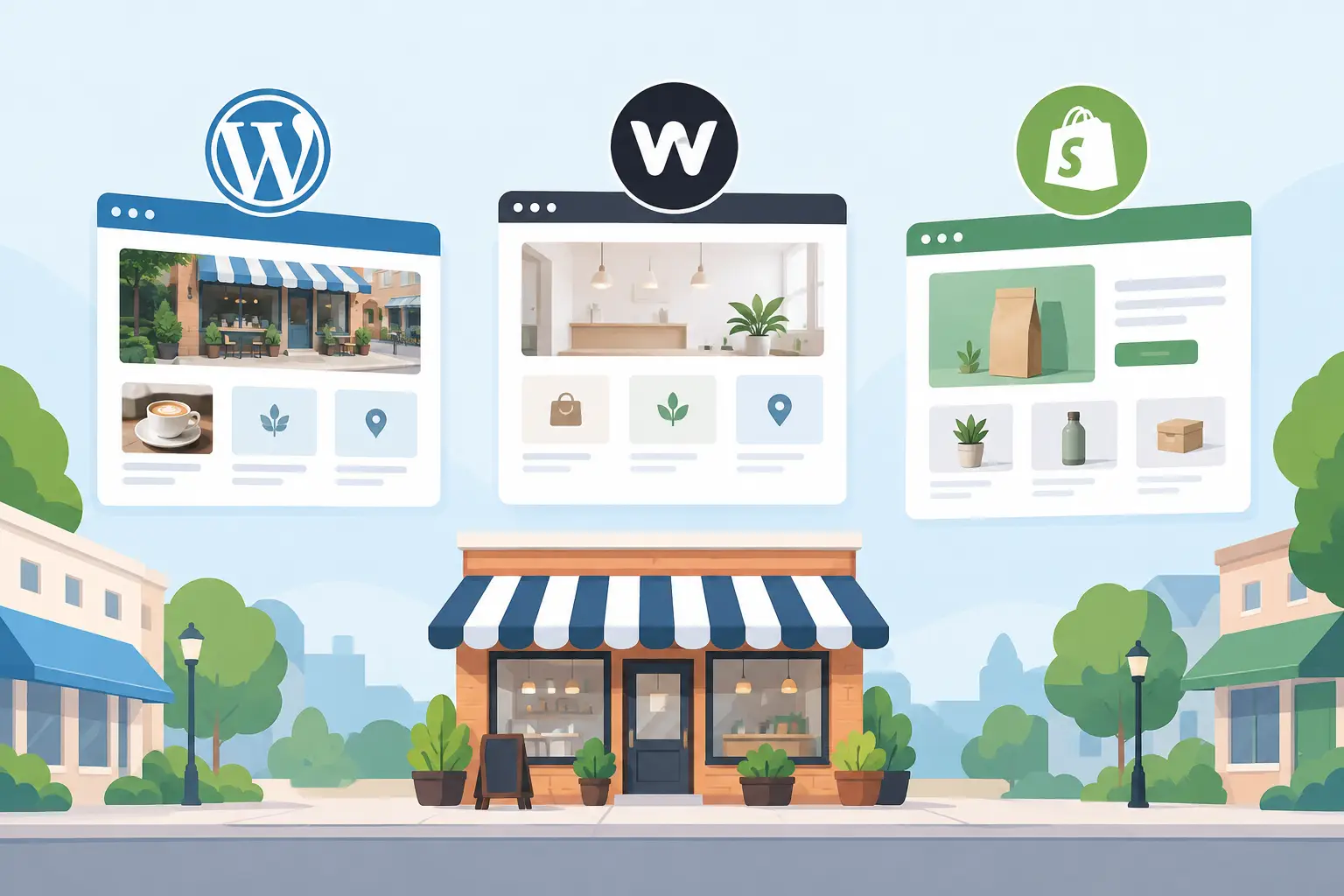
A website that looks tidy but fails to generate calls, quote requests or bookings is not doing its job. When comparing WordPress vs Wix vs Shopify, the right choice is less about which platform has the nicest templates and more about what your business needs the website to achieve over the next few years.
For a Fife electrician, solicitor, beauty clinic or consultancy, that usually means being found in Google, looking credible on a mobile phone, explaining services clearly and making it easy to enquire. An online retailer has a different priority: selling products reliably, managing stock and taking payments without friction. The platform should support the business model, not force the business to work around its limitations.
WordPress vs Wix vs Shopify: the business decision
WordPress, Wix and Shopify can all produce professional-looking websites. That is why choosing between them can feel confusing. The difference appears once you consider ownership, flexibility, search visibility, ongoing costs and what happens when the business grows.
Wix is a hosted website builder designed to get a site live quickly. Shopify is a hosted ecommerce platform built around product sales. WordPress is a content management system that can be shaped into almost any type of website, from a focused local service site to a more complex booking or ecommerce operation.
There is no honest one-size-fits-all answer. A small business selling a straightforward range of products may be better served by Shopify. Someone testing a side project with a very limited budget may find Wix adequate. But for many established local service businesses, WordPress offers the strongest balance of control, search potential and long-term value.
Wix: quick to start, easier to outgrow
Wix appeals because it removes many technical decisions. You choose a template, add text and images, connect a domain and publish. For a new business that simply needs a basic online presence, that can be useful.
The problem is that a quick build can become an expensive compromise. Templates encourage business owners to focus on colours, animations and page layouts before they have settled the customer journey. The result is often a site with too many competing messages, weak service pages and no clear route towards an enquiry.
Wix has improved its SEO tools, and a well-planned Wix website can appear in Google. However, it gives you less freedom than WordPress when you need a more considered site structure, tailored page templates, advanced content or specialist integrations. If a developer needs to change how the site works, there are practical limits to what can be done.
That matters when the website becomes a genuine part of your sales process. A local trades business may need location pages, project case studies, review integration, quote forms that feed into a CRM and automated follow-up. A professional firm may need resource pages, gated documents or a refined consultation process. These are not unusual requirements. They are the work that turns a website from a brochure into a business asset.
Wix can also create a sense of false economy. The monthly price looks manageable, but business owners may spend many unpaid hours making changes, working around template restrictions or replacing the site once it no longer reflects the quality of the business.
Shopify: excellent for selling products, not always services
Shopify is usually the clearest choice when ecommerce is the core of the business. It handles product listings, variants, checkout, payments, order management and stock far more naturally than a general website builder. If you are selling candles, clothing, food hampers or specialist equipment online, Shopify gives you a reliable foundation.
It is particularly strong where the buying journey is simple: a customer browses, adds products to a basket and checks out. The platform is maintained for you, and its commerce tools reduce the burden of running an online shop.
However, Shopify is not automatically the best option just because your business takes payments online. A service business that sells appointments, consultations, courses or a small number of products may not need an ecommerce-first platform. Its monthly subscription, transaction considerations and reliance on paid apps can add up. It can also be awkward when detailed service content, local SEO and lead generation matter as much as product checkout.
For example, a Fife-based kitchen installer might sell a few accessories online, but the main sale is a high-value design consultation. That business needs trust-building project pages, location relevance, strong photography, detailed service information and a clear consultation journey. Shopify can support parts of that, but it is not designed around that type of decision-making process.
Shopify is the right tool when selling products is the centre of the operation. It is less compelling when ecommerce is only a small feature of a wider service-led website.
Why WordPress suits many local service businesses
WordPress is not a drag-and-drop shortcut. A good WordPress site needs proper planning, quality hosting, considered design and regular maintenance. That is also its advantage: it can be built around how your business actually wins customers.
With WordPress, your pages are not confined to the structure of a template. A site can be designed around priority services, local areas, proof of work, reviews and the questions customers ask before contacting you. Each part of the website can lead naturally towards a call, form submission or booking.
It is also well suited to local SEO. Google needs clear signals about what you do, where you work and why your business is credible. WordPress gives you the flexibility to create useful service pages, location content, case studies and advice articles without fighting the platform. This does not mean publishing thin pages stuffed with town names. It means creating useful information that reflects genuine expertise and gives potential customers a reason to trust you.
Control is another important factor. With a professionally built WordPress website, you own the site and have greater freedom over hosting, functionality and future development. You are not locked into a builder because it is the only place your design can exist. If your needs change, the website can change too.
That flexibility needs managing sensibly. WordPress relies on updates, backups, security checks and compatible plugins. Neglect those basics and a cheap build can become slow, vulnerable or difficult to maintain. The answer is not to avoid WordPress. It is to have it built cleanly and maintained by someone who treats it as a commercial asset.
Costs: look beyond the monthly fee
Comparing platform costs only by subscription is a common mistake. A £20-per-month website that generates no enquiries costs more than a properly planned site that brings in regular work.
Wix and Shopify make their monthly pricing easy to see. Their total cost can rise through premium plans, apps, transaction charges, template upgrades and paid support. WordPress costs are less bundled: hosting, a domain, maintenance and professional development are usually separate. That can look less attractive at first glance, but it gives you a clearer view of what you are paying for and more control over each part.
The more useful question is: what does the website need to return? If one additional high-value job each month covers the cost of a better website, cutting corners on the platform and build is rarely a saving.
A sensible budget should also allow for ongoing improvement. Customer behaviour changes, services evolve and Google does not stand still. The strongest websites are reviewed, measured and refined rather than launched and forgotten.
How to choose the right platform
Start with the main action you need a visitor to take. If it is purchasing physical products online, Shopify deserves serious consideration. If you need a temporary, simple site and accept its limitations, Wix may be enough. If your website needs to build visibility, generate qualified leads and grow with a local service business, WordPress is usually the more capable long-term choice.
Then look at the questions many businesses overlook. Can you create dedicated pages for every valuable service? Can the site load quickly on mobile? Can form enquiries be sent to the right person and followed up? Can you add case studies without breaking the design? Can the site support a new location, team member or service without requiring a rebuild?
These questions are more useful than comparing template galleries. They reveal whether the platform will help the business move forward or quietly limit it.
At MonoWeb, the starting point is not a preferred design style or a fashionable feature. It is whether the website will make it easier for the right customers to find you, trust you and get in touch.
Before committing to any platform, map one real customer journey from Google search to enquiry. If the route is unclear on paper, a new template will not fix it. A website earns its keep when that route is clear, credible and easy to act on.
More Posts
 Website Tips
Website Conversion Checklist for More Enquiries
22 September 2026- Website Tips
Website Chat Versus Forms: Which Wins Enquiries?
21 September 2026 - Website Tips
How to Track Website Leads That Become Customers
20 September 2026