Custom Website Versus Template: Which Works?
A plumber in Dunfermline, a solicitor in Kirkcaldy and a beauty studio in Glenrothes can all buy the same polished website template. That does not mean they should. The real custom website versus template decision is not about whether one looks more modern on launch day. It is about whether the site helps the right people find the business, trust it quickly and make an enquiry.
For a new business with a modest budget, a template can be a sensible starting point. For an established service business losing enquiries to a dated, unclear or invisible website, it can also become a false economy. The right answer depends on what the website needs to do for the business over the next few years.
Custom Website Versus Template: Start With the Job
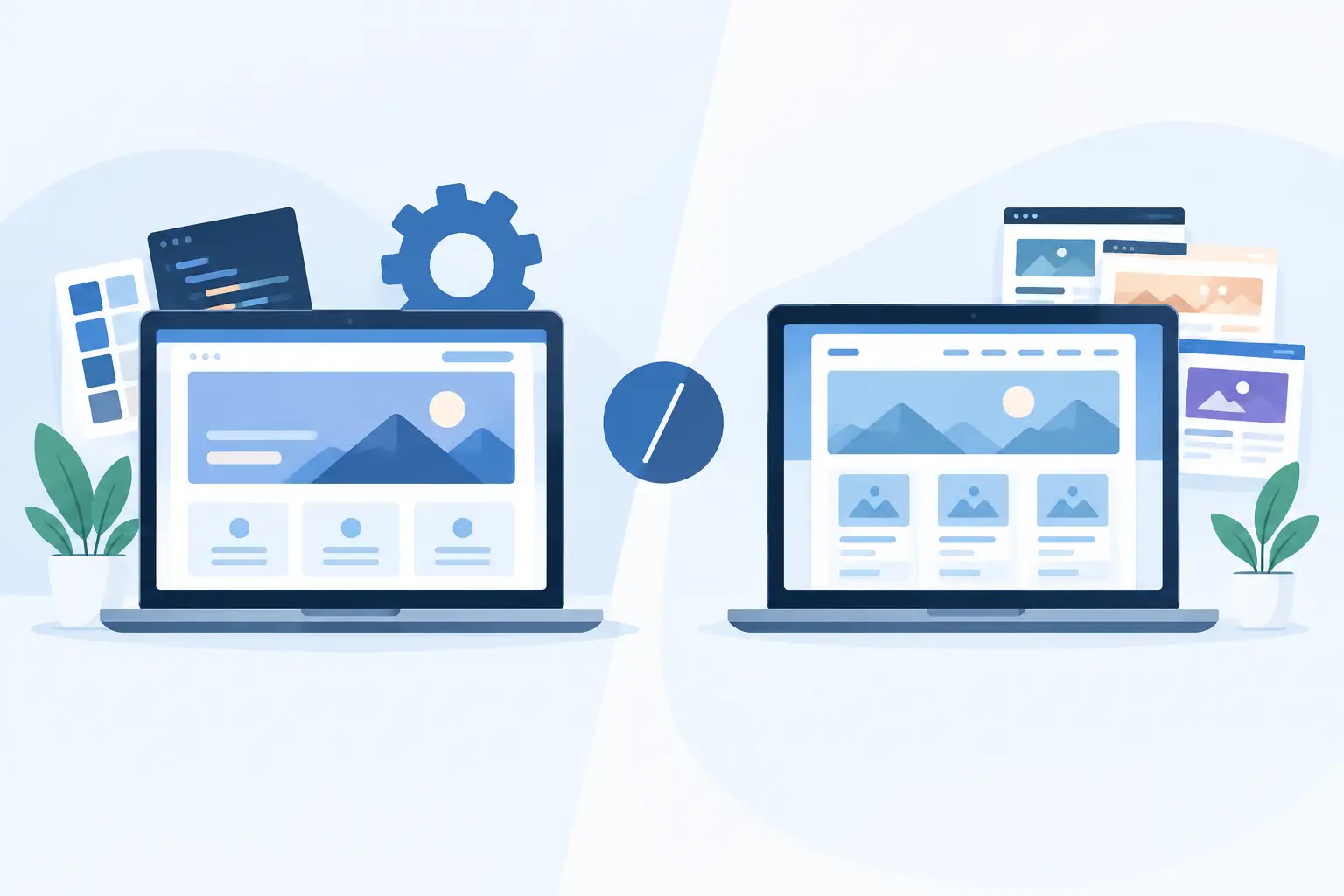
A website template is a pre-designed framework. You choose a layout, replace the sample text and images, adjust colours and add your services. WordPress templates can be useful because they reduce the time and upfront cost of getting online.
A custom website is planned around the business itself. Its pages, messages, calls to action and technical setup are designed to support a particular customer journey. That does not necessarily mean every line of code is created from scratch. It means the strategy is not forced to fit a generic layout.
That distinction matters. A template asks, “How can we make our business fit this design?” A properly custom build asks, “What does a potential customer need to see before they call, book or request a quote?”
If your main aim is to look credible enough to share a web address on a van, invoice or social profile, a template may do the job. If you want the website to generate work, support local Google visibility and make your team’s sales conversations easier, the decision needs more scrutiny.
Where Templates Make Good Business Sense
Templates are not inherently poor websites. The problem is treating them as a complete business solution when they are only a starting point.
They work best when the business is validating an idea, has a very limited service range or needs a simple holding site while something more considered is being planned. A sole trader who needs a clear home page, service details, contact information and a professional email address may gain more from getting a clean template live quickly than from delaying their launch for months.
A good template can also provide a solid visual base. Many are mobile-friendly, designed for WordPress and include sensible page structures. For businesses with straightforward needs, this can keep costs controlled.
The issue begins when the template is left largely unchanged. Stock photography, vague headlines and generic sections such as “we deliver quality” make a local firm sound like every other local firm. Visitors then have little reason to choose it over the next business in the Google results.
Templates can also bring hidden costs. They may rely on numerous plug-ins, include functions you will never use or become awkward to update after several rounds of edits. A cheap initial purchase does not guarantee a cheap or dependable website over time.
What a Custom Website Changes
Custom design is valuable when the business has something specific to communicate or a clearer commercial objective to achieve. It gives you control over the parts of a website that influence enquiries.
The message is built around customer intent
Someone searching for an emergency electrician does not want to scroll through a large image carousel before finding a phone number. Someone comparing accountants wants reassurance about services, experience, location and next steps. Someone considering a kitchen renovation may need evidence of previous work, a simple process and realistic reasons to get in touch.
A custom site can place the strongest message, proof and action in the right order. It can give each priority service its own page instead of squeezing everything into one broad paragraph. This makes life easier for customers and provides clearer information for search engines.
Local visibility has room to be planned properly
A website cannot promise first place on Google. It can, however, be structured so Google has a much better understanding of what you do, where you work and which searches your pages are relevant to.
That starts with focused service pages, useful page titles, local relevance, fast mobile performance and clear internal structure. A template may support these basics, but it will not decide which services deserve individual pages or how to distinguish your Fife coverage from a competitor’s.
For local service businesses, this is often where an apparently cheaper website costs the most. If it does not support the searches that bring qualified prospects, it may receive traffic without generating the right enquiries – or receive very little traffic at all.
Your credibility is not borrowed from a demo site
A template demo often looks convincing because it uses excellent photography, carefully written copy and a fictional brand with no awkward real-world details. Once replaced with rushed text and mixed-quality images, the same design can lose its impact.
Custom design creates a stronger relationship between your brand, your work and your audience. That might mean a professional but approachable tone for a family-run trade business, clearer case studies for a consultant or better booking information for a personal service. It is not decoration for decoration’s sake. It is evidence that the business is organised, established and worth contacting.
Growth does not have to mean a rebuild
Businesses change. You may add a service, cover a new area, recruit staff, start taking deposits or need quote requests to flow into your existing systems. A custom WordPress website can be built with these likely changes in mind.
This does not mean paying for features you do not need. It means avoiding a structure that becomes restrictive the moment the business develops. The most practical sites start focused, then allow room for sensible expansion.
The Cost Question Needs a Better Measure
The upfront price difference between a custom site and a template can be significant. That is real, and any honest recommendation should acknowledge it. A template-led site may suit a business that simply cannot justify a larger investment yet.
But compare cost against the value of one good customer, not only against another web design quote. If a £1,500 difference helps a business win a handful of profitable jobs over several years, it may be a sound commercial decision. If the site receives little traffic or sends visitors away because the offer is unclear, even a low-cost template is money poorly spent.
There is also an operational cost. Owners should not have to chase a developer for basic changes, decipher technical terms or coordinate a designer, copywriter, SEO provider and automation specialist separately. A website project becomes expensive when the business owner is forced to become the project manager.
Ask what is included: discovery and planning, copy guidance, mobile testing, basic local SEO setup, performance work, training, ongoing support and a clear handover. Two proposals with very different prices may not be offering the same thing at all.
Signs You Have Outgrown a Template
A template site is probably holding the business back if visitors regularly ask questions the website should answer, your most profitable services are difficult to find, or the site looks acceptable on desktop but frustrating on a phone. The same applies if you are relying on paid advertising because the site has no useful foundation for organic search.
Another warning sign is when every improvement feels like a compromise. You want to show projects properly, add location pages, improve booking or quotation forms, explain a complex service, or make the brand more professional, but the existing layout will not support it without workarounds.
A redesign is not always required immediately. Sometimes better copy, stronger imagery, fewer plug-ins and a clearer page structure can improve a template site substantially. However, if the core structure is wrong, polishing it will only delay a more useful rebuild.
How to Make the Right Choice
Before choosing either route, be clear about the website’s job. Decide which services matter most, which areas you want to serve, what a worthwhile enquiry looks like and what proof customers need before acting. Those answers should shape the site more than current design trends.
Choose a template when speed and affordability are the priority, your offer is simple and you are prepared to keep the content focused. Choose a custom build when the website needs to support growth, differentiate the business, improve local search visibility or convert a meaningful volume of enquiries.
The best choice is not the one with the most impressive demo. It is the one that gives a prospective customer a clear reason to trust you and an easy way to take the next step. If you are unsure which category your current site falls into, a frank website review can reveal whether targeted improvements are enough or whether the business is paying for a website that is no longer fit for purpose.
More Posts
 25 September 2026
- Website Tips
How to Improve Form Conversions on Your Website
24 September 2026 - Website Tips
WordPress vs Wix vs Shopify for Local Businesses
23 September 2026